Kids chores to Earn money | Parenting Guide List
As parents, my wife and I have always been keen on teaching our children the value of money. In today’s world, where kids seem to have increasingly expensive tastes and often obsess over the latest gadgets, we realize the importance of instilling financial responsibility early on. Unlike when we were young and didn’t fixate on having the newest phone or trendy items, our children are growing up in a different era. A recent survey found that 82% of parents reported doing chores as children, but only 28% were assigning chores to their kids. That’s why we’ve come up with a comprehensive list of chores for kids to earn money, believing it’s a crucial step towards their lifelong financial stability.
My chore chart system has become the second most popular topic of conversation in our household, right after “What’s for dinner?” It’s not only an easy way of sharing the household workload but also a practical method to teach our kids about earning and managing money. Research indicates that children who earn money by doing chores are often better equipped to manage their finances in adulthood compared to those who receive allowances without working for them. When our son started asking for expensive items, we decided to create a chart that would clarify how he could work towards buying them himself. This approach will make the transition to adulthood much easier, as they’ll already understand the concept of earning through effort. Plus, let’s be honest, having some monetary incentive makes chores a lot more appealing to kids!
Table of Contents
Importance of Chores in Child Development
As parents, we’ve discovered that involving our kids in household chores is more than just a way to distribute tasks – it’s a powerful tool for shaping their future. Research backs this up, with a 20-year study from the University of Minnesota finding that doing chores from as young as 2 years old was the best predictor of success in adult relationships, both personal and professional.
Chores play a crucial role in teaching responsibility and essential life skills. When our children do laundry, they learn about personal care; when they help with cooking, they develop time management skills. These tasks may seem small, but they’re building blocks for independence and competence. A Harvard study revealed that adults who did chores as children grew up to be more self-reliant and collaborative. Moreover, chores foster a strong work ethic, which the Harvard Grant Study, running since 1938, identified as a key factor in adult happiness and success. While it can be tempting to do everything ourselves, we’ve found that the short-term challenges of getting our kids to do chores are far outweighed by the long-term benefits to their character and capabilities. It’s an investment in their future that will pay dividends throughout their lives.
The Role of Pocket Money in Financial Literacy
My wife and I found pocket money to be an incredibly powerful tool for teaching our kids about financial responsibility. It’s not just about giving them cash; it’s about providing hands-on experience in managing money. We’ve watched our children grow to understand the value of a dollar and develop crucial budgeting skills through this simple practice. What’s really interesting is that research backs up what we’ve seen at home. A study by ING found that 83% of adults learned how to save through pocket money as children. Even more striking, 55% of adults who received pocket money as kids regularly save money now, compared to only 45% of those who didn’t. These figures really drive home how important these early financial lessons can be.
In our family, we’ve tied pocket money to chores, and it’s been incredibly effective. We gradually increase the amount as our kids get older and can handle more responsibility. My wife’s friend shared with us that in Australia, children receive an average of $14.40 per week, with teenagers getting around $22.70. We followed her advice and noticed that it helps prepare kids for more complex financial decisions as they grow. By connecting money to work, we’re not just teaching them about finances but also instilling a strong work ethic. It’s amazing to see how these early lessons in responsibility, decision-making, and long-term planning are shaping their approach to money. I truly believe we’re helping them build a solid foundation for financial literacy that will serve them well into adulthood.
Overview of Approaches to Chores and Allowances
As a parent, I’ve discovered that the approach to chores and allowances varies greatly from family to family. In our household, we’ve experimented with different methods over the years. Initially, we tied allowances directly to chores, thinking it would teach our children the value of work and money. However, we soon realized this approach had some drawbacks, as our kids started expecting payment for every little task. That wasn’t the lesson we wanted to impart.
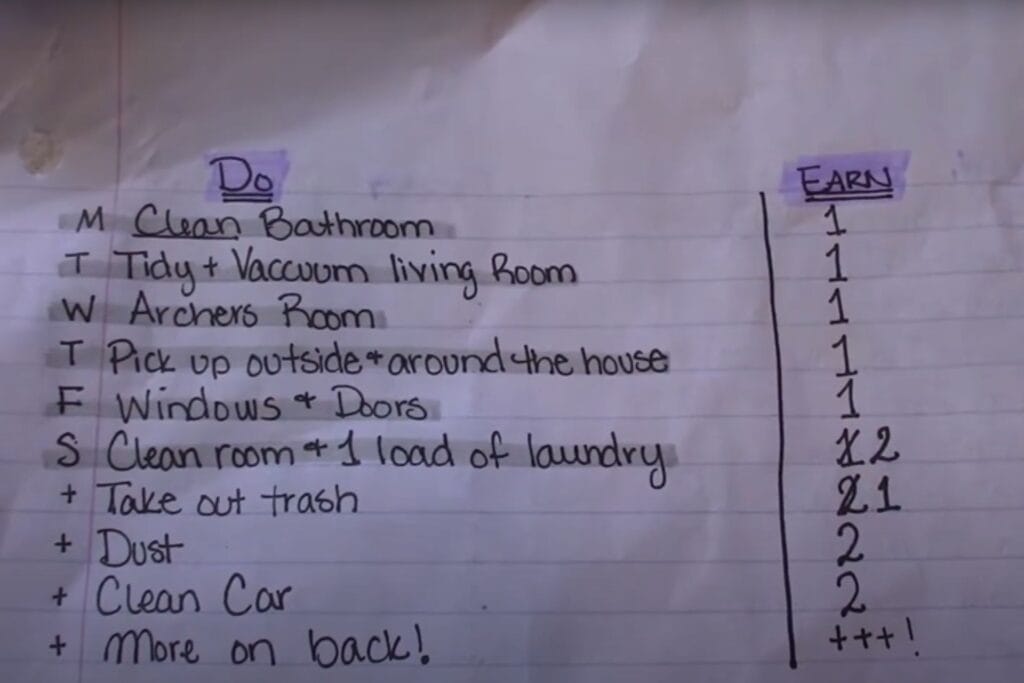
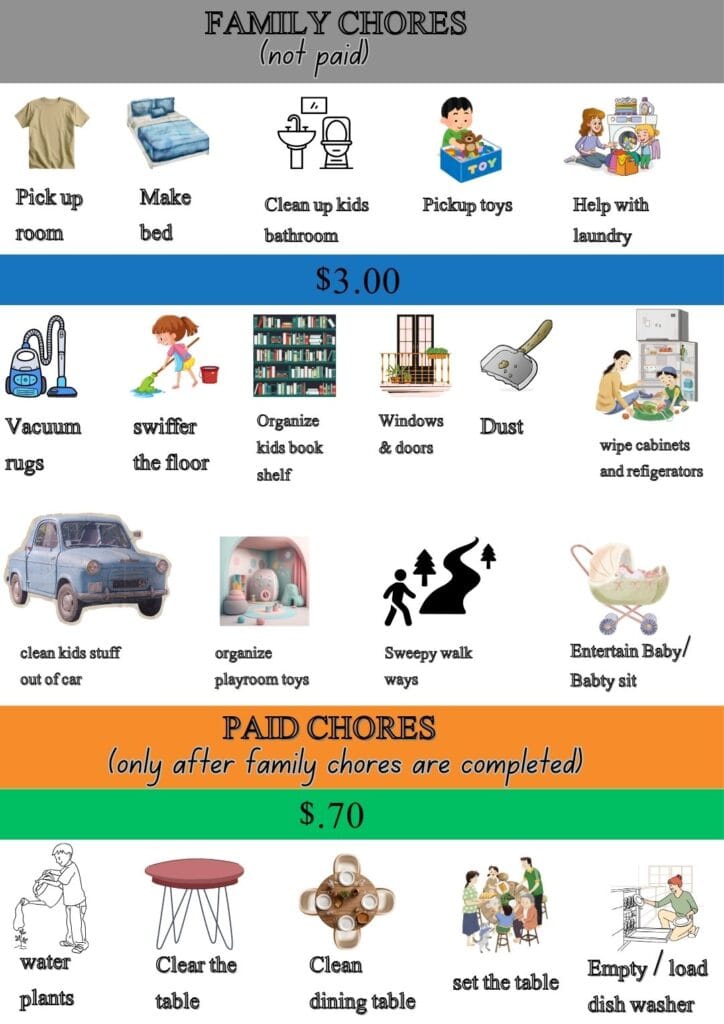
So, we switched to a hybrid system that works well for us. Our children have basic chores they’re expected to do as part of being a family member, like making their beds or helping with dishes. These aren’t tied to any payment. But we also have a list of extra tasks they can do to earn money, like mowing the lawn or deep cleaning the bathroom. This approach teaches our kids that everyone needs to contribute to the household while also giving them opportunities to earn money and learn about financial management. Ultimately, there’s no one-size-fits-all solution. What matters most is finding a system that aligns with your family’s values and consistently applying it. For us, the goal is to raise responsible kids who understand the value of work and know how to manage money wisely.
Chore Recommendations and Examples
Being a parent, I’ve discovered that assigning age-appropriate chores to our kids has been incredibly beneficial. A close friend from my office recommended this approach, and it made a noticeable difference in how our children contribute around the house. I’d like to share my experiences and some interesting facts I’ve learned along the way.
Age-Appropriate Chores
A. Chores for Kids Ages 2-3
Development Focus: At this young age, our goal is to introduce simple tasks that make them feel like they’re part of the team. It’s all about instilling a sense of contribution and responsibility early on.
- Putting toys away: This teaches kids organization and the importance of keeping shared spaces tidy.
- Wiping up spills: Helps them understand how to be proactive, cause and effect, and that they can fix small problems themselves.
Did you know? A study by the University of Minnesota found that involving children in household tasks at an early age contributes to their sense of competence and self-reliance throughout their lives.
B. Chores for Kids Ages 4-5
Development Focus: Introducing routine responsibilities to establish good habits.
- Making their bed: A simple task that gives them a sense of accomplishment to start the day.
- Setting the table: Involves them in family meals and teaches basic etiquette and manners.
Interesting fact: Research shows that children who do chores have higher self-esteem and are better able to deal with frustration and delay gratification—all essential skills for success later in life.
C. Chores for Kids Ages 6-7
Development Focus: Encouraging independence and reinforcing consistency in their daily routines.
- Packing their school lunch: Promotes decision-making and understanding of healthy eating.
- Dusting furniture: Teaches attention to detail and care for household items.
- Watering plants: Introduces them to nurturing, schedule of watering and responsibility for living things.
- Organizing toys: Reinforces organizational skills and respect for their belongings.
D. Chores for Kids Ages 8-9
Development Focus: We’re introducing more complex tasks to foster problem-solving skills.
- Taking out the trash: Teaches them about waste management and environmental responsibility.
- Helping with cooking: Enhances their understanding of nutrition and following instructions.
- Vacuuming: Builds a sense of accomplishment and proficiency with household appliances and attention to cleanliness.
- Folding laundry: Develops fine motor skills, basic hygiene and neatness.
E. Chores for Kids Ages 10-12
Development Focus: Preparing them for adolescence by building competence and confidence.
- Mowing the lawn: Teaches them to operate machinery safely and care for the property.
- Washing the car: Encourages pride in maintaining family belongings.
- Cleaning the bathroom: Emphasizes hygiene and thoroughness.
- Doing laundry: Prepares them for self-sufficiency and shows them how to sort laundry by fabric quality in the future.
F. Chores for Teens (Ages 13–18)
Development Focus: Emphasizing accountability and transitioning to independence.
- Yard work: Involves planning and executing larger tasks like pool cleaning.
- Assisting with bills: It’s a good opportunity to introduce them to financial literacy and budgeting.
- Deep cleaning: Develops a strong work ethic and attention to detail.
- Household maintenance: Equips them with practical skills for adulthood.
Surprising statistic: The Harvard Grant Study, which followed participants for over 75 years, found that those who did more chores in childhood were more likely to be successful in their careers.
Types of Chores
A. Daily Chores
Before School Chores
- Purpose: Starting the day with productivity sets a positive tone and builds a healthy routine.
- Examples:
- Making the bed: Encourages organization from the get-go.
- Getting ready independently: Fosters self-reliance and time management.
Lunchtime Chores
- Purpose: Midday tasks keep them engaged and responsible throughout the day.
- Examples:
- Preparing simple meals: Boosts their confidence in the kitchen.
- Cleaning up: Teaches them to take responsibility for their messes.
After School Chores
- Purpose: Balancing academics and home duties teaches multitasking.
- Examples:
- Tidying up: Maintains a clean environment conducive to study.
- Feeding pets: Instills routine and care for others.
B. Weekend Chores
- Purpose: Weekends are ideal for larger tasks that require more time.
- Examples:
- Yard work: Physical activity that contributes to home upkeep.
- Thorough cleaning: Deep cleaning tasks that keep the household in top shape.
C. Chores by Room
Kitchen Chores
- Purpose: Maintaining cleanliness and order in a central family space.
- Examples:
- Washing dishes: Fundamental skill for hygiene and self-care.
- Emptying the dishwasher: Responsibility for communal spaces.
- Loading the dishwasher: Understanding organization and efficiency.
- Cleaning countertops: Prevents the spread of germs.
Bathroom Chores
- Purpose: Emphasizing hygiene and sanitation.
- Examples:
- Cleaning sinks: Teaches about germs and attention to detail.
- Scrubbing the shower: Promotes cleanliness.
- Restocking supplies: Responsibility for household needs.
- Wiping mirrors: Enhances visual cleanliness.
Living Room Chores
- Purpose: Keeping communal spaces welcoming and tidy.
- Examples:
- Dusting: Maintains air quality and cleanliness.
- Vacuuming/Mopping floors: Regular maintenance of shared areas.
- Organizing books: Encourages respect for shared items.
- Cleaning the TV screen: Care for electronics.
Bedroom Chores
- Purpose: Personal space management and responsibility.
- Examples:
- Organizing clothes: Teaches organization and decision-making.
- Changing bed linens: Promotes personal hygiene.
- Vacuuming under the bed: Attention to often-overlooked areas.
- Dusting shelves: Maintains and organizes a clean environment that helps to begin a new day on a positive note.
Pet Chores
- Purpose: Caring for family animals teaches empathy.
- Examples:
- Walking the dog: Responsibility and physical activity.
- Cleaning litter boxes: Hygienic care for pets.
- Brushing the pet: Bonding and grooming skills.
- Cleaning bedding: Ensures pet comfort and cleanliness.
Laundry Chores
- Purpose: Clothing care and organization.
- Examples:
- Sorting clothes: Understanding fabric care.
- Folding laundry: Enhances neatness and order.
Yard Work
- Purpose: Outdoor maintenance and appreciation for the environment.
- Examples:
- Raking leaves: Seasonal responsibility.
- Mowing the lawn: Teaches equipment safety.
- Watering the garden: Nurtures patience and care.
- Sweeping patios: Keep outdoor areas inviting.
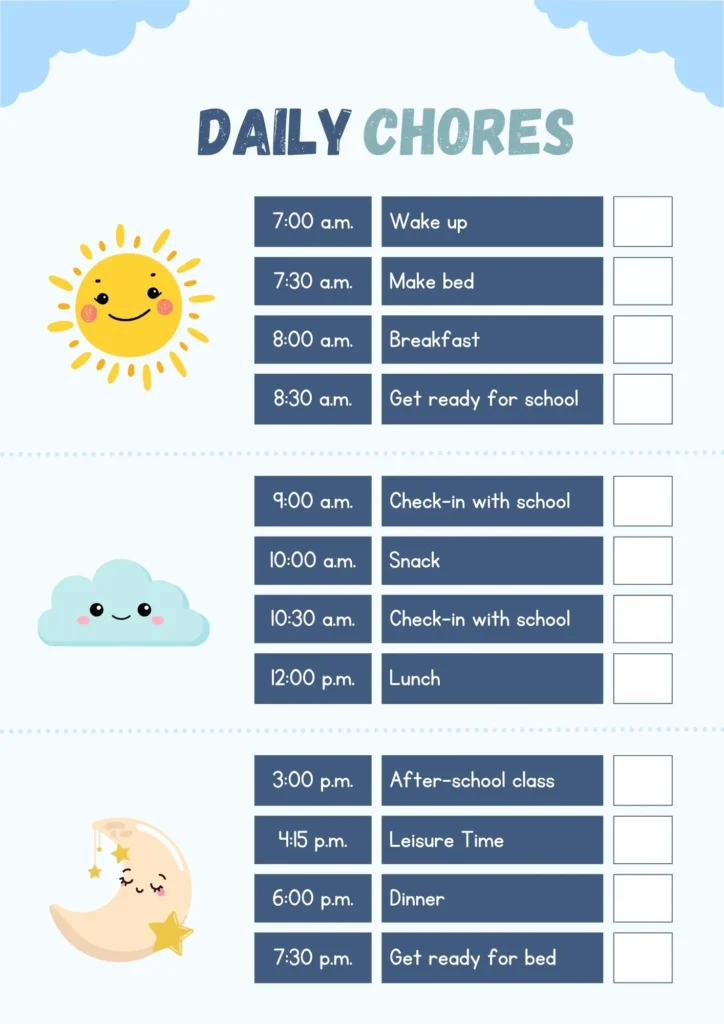
Sample Chore Lists
A. Age-Appropriate Chore Example
I’ve compiled detailed charts and suggestions for my kids tailored to each age group. For instance, my 8-year-old handles tasks like vacuuming and helping with cooking, while my 12-year-old takes on laundry and mowing the lawn. These lists help set clear expectations.
B. Habits Formed: My Children’s Daily Chore List
Establishing daily chore habits for my kids has been one of the most rewarding choices my spouse and I have made as parents. Initially, we wanted to keep the house tidy, but over time, these chores have become ingrained in our children’s everyday lives. Inspired by a close friend’s recommendation, we created a chore list that not only helps with household tasks but also instills a sense of responsibility and teamwork in our kids. It’s incredible to see how these daily routines have transformed into habits that contribute to their personal growth and our family’s harmony. Following are the chores that have been ingrained into my kids as a habit.
- Making the bed
- Setting the table
- Packing school lunch
- Dusting furniture
- Watering plants
- Taking out the trash
- Helping with cooking meals
- Vacuuming
- Folding laundry
- Mowing the lawn
- Washing the car
- Cleaning the bathroom
- Doing laundry
- Yard work
- Assisting with bills
- Deep cleaning
- Household maintenance
- Walking the dog
- Cleaning litter boxes
- Sorting clothes
- Clean windows
- Cleaning shoes
- Organizing closets
- Doing odd jobs for neighbors
- Making meals
C. Chore Ideas by Room
My wife is a genius in organizing chores by room. According to her, this makes it easier for everyone to know what needs to be done at home daily and manage household tasks. She assigns the tasks according to different parts of the house. When she shared these ideas with her friends, they inspired it, and I hope you will love her ideas as well. These tasks categorized according to different parts of the house are as follows:
Kitchen:
- Loading the dishwasher
- Cleaning countertops
Bathroom:
- Restocking supplies
- Wiping mirrors
Living Room:
- Organizing books
- Cleaning the TV screen
Bedroom:
- Vacuuming under the bed
- Dusting shelves
Pet Care:
- Brushing the pet
- Cleaning bedding
Laundry Chores:
- Sorting clothes
- Folding laundry
Yard Work:
- Watering the garden
- Sweeping patios
Eye-opening fact: A survey by Braun Research found that 82% of adults said they had regular chores growing up, but only 28% reported giving their own children chores. We’re determined to be in that 28%, giving our kids the benefits of responsibility from an early age.
In my household, this structured approach to chores not only keeps our home running smoothly but also teaches our kids valuable life skills. It’s amazing to see how proud they are when they complete a task, no matter how small. Plus, it’s been a great way to prepare them for the realities of adult life—after all, the dishes don’t wash themselves!
Assigning Chores
As a parent of three kids, I’ve learned a lot about assigning chores over the years. Let me share some insights that have worked wonders for my family, along with some interesting facts.
Choosing Tasks Appropriate for Your Child
When it comes to assigning chores, it’s crucial to assess your child’s abilities and interests. I remember when our youngest daughter was just 4, she was eager to help but couldn’t handle complex tasks. We started her with simple jobs like putting away her toys, which she loved. As she grew, we gradually increased the complexity of her chores.
Interestingly, an experimental study by researchers found that involving children in household tasks from an early age (around 3 or 4) was the best predictor of success in their mid-20s; this really motivated us to get our kids involved early on.
Setting Up a Chores Routine
Establishing consistency has been key for us. We use chore charts and schedules to keep everyone on track. Our oldest son, now 12, particularly loves the digital chore chart app we use. It gamifies the process, which keeps him engaged.
Chore Charts to Incentivize Kids
Visual trackers have been a game-changer for motivation in our house. Our middle child, who’s 8, loves seeing her progress on the chart. It’s like a personal challenge for her to complete all her tasks.
A study published in the Journal of Developmental & Behavioral Pediatrics found that children who do chores show higher levels of academic achievement and have better relationships with family and friends. We’ve certainly noticed our kids becoming more responsible and confident as they tackle their chores.
Making the Routine Work for You and Your Kids
Flexibility and adaptation are crucial. We’ve had to adjust our system several times as our kids have grown and their schedules have changed. For instance, when our oldest son started middle school, we shifted his chores to the weekends to accommodate his increased homework load.
Taking Your Chores Routine to the Next Level
As our kids have gotten older, we’ve introduced time management concepts. Our 12-year-old son now plans on a weekly planner when he’ll do his chores around his other activities. We’ve also set up a reward system for completing all chores on time for a month.
The American Academy of Child and Adolescent Psychiatry states that chores help children feel that they’re important contributors to the family, enhancing their self-esteem. We’ve definitely seen this boost in confidence in our kids.
Extra Tips from Experienced Parents
Here’s some practical advice we’ve learned:
- Start small and gradually increase responsibility.
- Be consistent with expectations and consequences.
- Make chores a family activity when possible.
- Praise effort, not just results.
- Allow for some choice in chores to increase buy-in.
One common pitfall we’ve avoided is doing the chores for the child if they’re struggling. Instead, we work alongside them to teach and encourage.
A fascinating study from the University of Mississippi found that children who do chores have higher self-esteem, are more responsible, and are better able to deal with frustration and delayed gratification. All these skills contribute to greater success in school and later in life.
In our experience, assigning chores has not only kept our home running smoothly but has also been an invaluable tool in teaching our kids life skills, responsibility, and the value of hard work. It’s amazing to see how capable and confident they’ve become as they’ve taken on more household responsibilities.
Managing Pocket Money and Allowances
As parents of three amazing kids — a 13-year-old son, an 8-year-old son, and our youngest daughter, who is 5 — my wife and I have spent a lot of time thinking about pocket money and allowances. We had many heart-to-heart talks about whether giving pocket money in exchange for chores is the right approach and how it impacts our children’s growth. After trying different approaches over the years, I’d like to share our experiences and what we’ve learned.
Deciding Whether to Offer Pocket Money for Chores
This is a point we’ve struggled with. There are arguments on both sides, and we’ve found that what works best can change as our kids grow.
Reasons to Consider Paying for Chores
One viewpoint suggests that compensating children for chores teaches them the connection between work and reward. When our oldest was younger, we tried paying him for chores. The idea was to teach him about earning and reward. It encouraged a good work ethic – he was eager to do tasks to earn money for things he wanted. It mirrors real-world scenarios where effort is tied to compensation, preparing them for future jobs. A survey by the American Institute of Certified Public Accountants found that 75% of parents believe paying allowances helps teach financial responsibility, with 54% of those parents starting to do so when their child was younger than 8 years old.
Reasons to Avoid Paying for Chores
Conversely, some believe that household duties are a family responsibility and shouldn’t come with a monetary reward. As our family grew, we started to feel that chores should be done as part of being in a family, not for payment. Now we expect our 8-year-old to tidy his room and our daughter to assist in setting the table without expecting payment. This approach emphasizes that contributing to the home is part of being in a family. Experts caution that paying for every chore might create a mindset where children only help out if there’s something in it for them. We don’t want our kids to expect payment for everything they do around the house.
Exploring Different Methods of Providing Pocket Money
Differentiating Chores vs Allowances
Some families choose to keep chores and allowances separate for financial learning. We experimented with this by giving our kids a fixed weekly allowance to manage their own expenses, independent of their household duties. Also, financial experts suggest that this teaches them responsibility, money management, budgeting and financial planning as standalone skills.
Opting Out of Allowances
Some parents decide not to give allowances at all, focusing instead on other ways to teach the value of money, such as encouraging entrepreneurial efforts. While our youngest is still too little, our eldest has started offering pet-sitting services to neighbors, learning to earn money independently.
Unpaid Family Chores
In our household, certain tasks are expected without compensation. After dinner, everyone helps clean up, highlighting the importance of teamwork and contribution over financial reward.
Family Duties Before Earning Extra
We’ve established that family responsibilities come first. Once our kids complete their expected chores, they have the option to take on additional tasks for extra pocket money. This ensures they prioritize communal obligations while still providing opportunities to earn.
Deciding on the Right Amount of Pocket Money
Average Weekly Allowance by Age
Figuring out how much to give can be tricky. According to a 2019 report by RoosterMoney, the average weekly allowance for kids aged 4-14 should be about $7.91. However, the amount often depends on factors like age, responsibilities, and the family’s financial situation.
Guidelines for Allowance Based on Age
We follow a rough guideline of $1 per week for each year of age. So, our 8-year-old receives $8 weekly, and our 13-year-old gets $13. This method scales the allowance appropriately as kids grow older. Also, financial experts recommend this.
Assigning Value to Each Chore
When it comes to paying per chore, we assign amounts based on the difficulty and time required for each task. For example:
- Mowing the lawn (13-year-old): $10
- Washing the car (13-year-old): $8
- Organizing the garage (8-year-old): $5
- Watering plants (5-year-old): $2
Typical Earnings for Common Chores
While there’s no universal standard, it’s important to be consistent. We make sure the payment reflects the effort involved, teaching our kids that more challenging tasks come with greater rewards.
Best Practices for Paying for Chores
- Simplifying the Payment Process: To keep everything organized, we use a chart on the fridge where the kids mark off completed chores. Also, it helps to remind them. At the end of the week, we review it together and handle any payments. This system makes the process transparent and teaches them to track their work.
- Utilizing Apps for Chore and Allowance Management: We’ve recently started using an app called FamZoo to assign chores, monitor completion, and manage allowances digitally. Our tech-savvy teenager appreciates this modern approach, and it helps the younger ones visualize their progress by seeing their earnings add up. You can also use the Greenlight app for the same purpose. I have heard some good reviews of that app as well.
Making Chores and Pocket Money More Effective
- Building Foundations for Financial Success: I believe that teaching financial literacy starts at home. A study from the University of Cambridge suggests that money habits are formed by age 7. By involving our kids in managing their pocket money, we’re laying the groundwork for responsible financial behavior.
- Encouraging Open Conversations About Money: We make it a point to discuss money matters openly. Topics like saving for goals, smart spending, and budgeting are regular conversations. This openness encourages our kids to ask questions and learn.
- Teaching the Importance of Giving: We encourage our children to set aside a portion of their allowance for charitable causes. Our 8-year-old chose to donate to a local animal shelter, which fosters empathy and social responsibility.
The Benefits of Responsibilities and Pocket Money
- Positive Impacts on Children’s Development: Assigning chores and handling pocket money has helped our kids develop self-discipline and improved their self-esteem. Completing tasks gives my kids a sense of achievement, and managing their own money helps to boost their confidence in making decisions.
Educating on Financial Literacy
- Understanding Financial Literacy and Its Importance: Financial literacy means understanding how money works in the world and knowing how to manage it — earning, saving, investing, and spending wisely. Teaching our kids these skills is crucial for their future independence. A study by the FINRA Investor Education Foundation found that only 24% of Millennials show basic financial literacy. We aim to improve that within our family.
In my experience, there’s no one-size-fits-all solution. Balancing chores and pocket money requires understanding each child’s unique needs and maturity level. Whether you decide to pay for chores or not, the ultimate goal is to prepare our kids for the real world by teaching responsibility, the value of hard work, and financial savvy.
Implementing Chore Systems
As parents, my spouse and I realized that establishing a structured chore system was essential for our family. A colleague mentioned how chore charts transformed their household, so we decided to give it a try. Here’s how we implemented chore systems that have worked wonders for our kids.
Chore Charts and Incentive Systems
Visual chore charts were incredibly effective, especially for our younger kids. We use a free printable chore chart template that we found online, which allows us to customize it for each child. For our 13-year-old, we’ve moved to a digital app that he can access on his phone, which suits his tech-savvy nature.
Printable Paid Chore Lists
We started implementing a chore system for our kids by creating a list of printable paid chores. We took inspiration from different online templates and then made our own customized list; these were specifically tailored to fit each child’s age and responsibilities. This visual approach made it easier for our kids to understand what was expected of them.
This template allowed us to assign specific chores, set deadlines, and allocate rewards for completed tasks. This personalized system kept them engaged and accountable.
Kids Chore Charts to Earn Money
To make chores more exciting, we gamified the chore system for our 8-year-old son, turning it into a fun challenge. He earns points for completed chores, which can be redeemed for money or rewards that can later be exchanged, like extra screen time or a small allowance.
Additionally, turning chores into games transformed boring tasks into fun challenges. Our 8-year-old was thrilled to earn points for organizing his toys, while our teenager became more proactive with his responsibilities.
Integrating Chores into Daily Routine
- Morning Routines: My wife has incorporated chores into our morning routines to set a positive tone for the day. Our whole family does simple tasks like making the bed, tidying our rooms, or feeding the pet before breakfast. This not only sets a productive tone for the day but also gives us a sense of accomplishment at the start of the day.
- Evening Routines: Evening chores are added to our family as wind-down activities to help transition us to bedtime. In the evening, we have a family clean-up time when everyone cleans and sets out clothes for the next day.
Encouraging Consistency and Accountability
Positive Reinforcement Techniques
We use a lot of praise and encouragement. Acknowledging someone’s efforts, even for small tasks, makes a significant difference and motivates them to continue. Consistency was key, and we used positive reinforcement to encourage it.
For instance, after our daughter consistently completed her chores for a week, we celebrated with a family movie night. This motivated her to keep up the good work.
Consequences for Missed Chores
Natural consequences often work best, so we thought of establishing a system of consequences for missed chores as well as teaching accountability. For example, If a chore was missed, privileges like screen time were reduced. This approach wasn’t about punishment but about helping them understand the importance of fulfilling their commitments.
One tool that’s been particularly helpful is the Hire and Fire Your Kids app. It allows us to assign points or rewards for each completed task, which makes chore completion more fun and engaging for our children. The app tracks progress and provides feedback, which has increased their motivation.
We’ve also found that involving our kids in setting up the chore system increases their buy-in. For instance, we let them choose some of their chores and have a say in the rewards. This approach aligns with advice from child development experts who suggest that giving children some control over their chores can increase their sense of responsibility.
Another strategy that’s worked well is setting clear deadlines for chores. This helps our kids manage their time better and reduces the need for constant reminders.
Lastly, I want to add that parents should learn to be flexible and adjust the system as the kids grow and their capabilities change. What worked for our 13-year-old when he was younger doesn’t necessarily work now, so we’re constantly evolving our approach.
Remember, every family is different, and what works for us might not work for everyone. The key is to find a system that fits your family’s needs and to be consistent with it. As the research shows, involving children in household tasks from an early age can contribute to their sense of competence and self-reliance throughout their lives.
Challenges and Solutions
In our household, implementing a chore system hasn’t been without its hurdles. My spouse and I have faced many challenges, ranging from our kids’ reluctance to balance their schoolwork with household responsibilities. With time through experience and advice from friends, we developed strategies to overcome these hurdles. I’d like to share our insights and suggestions with you, which help you if you are struggling with similar issues.
Dealing with Resistance to Chores
One of the biggest challenges we faced was our kids’ reluctance to take on additional responsibilities. Our 13-year-old son, in particular, would often argue that he had better things to do, our 8-year-old son often “forgot” his tasks, and our youngest daughter needed constant reminders. To overcome this reluctance, we implemented a few strategies:
- Open Communication: We held a family meeting to discuss why chores are important. In that open communication, we involved our kids in choosing their chores and explaining how everyone’s contribution keeps the household running smoothly, helping them understand the bigger picture. According to child development experts, involving kids in decision-making increases their sense of control and ownership.
- Setting Clear Expectations: I created a chore chart for each child, outlining their daily and weekly tasks. Visual aids made it easier for them to remember their responsibilities and reduced excuses.
- Offering Choices: Allowing our kids to choose a chore of their own choice gave them a sense of control. This strategy significantly reduced their resistance. For instance, our 8-year-old preferred watering the plants over dusting, so we made that swap.
- Positive Reinforcement: A friend advised using a reward system of praising them when kids complete chores without being asked to encourage them and keep up the good work, like extra playtime or a favorite dessert; it also worked wonders with great success. According to a study by the Center for Parenting Education, children are more likely to comply with chore requests when they understand the reasons behind them and feel they have some choice in the matter.
Adjusting Chore Expectations
Flexibility is key when it comes to chores, and we realized that being too rigid with chore assignments wasn’t effective, especially when our kids had busy schedules due to school projects or extracurricular activities. Also, kids’ schedules change as they grow, so expectations should also be adjusted accordingly.
- Understanding Commitments
- Simplifying the Tasks
- Rotating Chores
For instance, on days when our teenager had basketball practice, we adjusted his chores accordingly. Similarly, when our 13-year-old started middle school and had more homework, we shifted some of his chores to the weekend. We also allow our 8-year-old to choose when she does her chores as long as they’re completed by the end of the day. We broke down larger chores into smaller, manageable tasks to prevent them from feeling overwhelmed.
A neighbor, who’s a child psychologist, advised us to be realistic with our expectations. She pointed out that children’s abilities change with time, and chores should reflect this. My wife and I now rotate our chore list every few months to ensure it is age-appropriate and allows our kids to develop a variety of skills. Our daughter was excited to switch from setting the table to helping with baking.
Balancing Schoolwork and Chores
Finding the right balance between schoolwork and household duties is tricky to avoid, especially when kids grow older. So, I implemented a few strategies to help with this:
- Creating a Schedule: Helped my kids develop a daily routine, which taught them valuable time management skills. Our 13-year-old now uses a planner to schedule his homework, chores and leisure activities.
- Setting Priorities: I emphasize that schoolwork is a top priority. If they had a big test coming up, I would lighten their chore load temporarily. This flexibility showed them that I respect their academic commitments.
Prioritizing Responsibilities
Teaching Planning Skills: We encouraged our kids to plan their week ahead, noting important deadlines and adjusting chores as needed. This not only helped with chores but also improved their organizational skills for school. After all, the goal is to prepare them for the real world, where they’ll need to juggle multiple responsibilities effectively.
Incentives for Effective Time Management: We introduced rewards for completing both schoolwork and chores efficiently. This motivated them to manage their time better and reduced procrastination.
Implementing these strategies wasn’t an overnight success, but over time, we noticed a significant improvement in our children’s cooperation and responsibility. They’re more proactive in completing their chores and better at managing their time.
One tool that’s been incredibly helpful is the OurHome app. It allows us to assign chores, set deadlines, and even allocate rewards. Our kids can see their tasks for the week and plan accordingly. It’s been a game-changer in teaching them to balance their responsibilities. They’ve also become more organized with their schoolwork.
Lastly, we’ve learned to lead by example. My wife and I make sure to do our own chores promptly and without complaint. We’ve noticed that our kids are more likely to do their chores without fuss when they see us doing the same. A friend once told me that “consistency and patience are key,” and I couldn’t agree more. If you’re facing similar challenges, I recommend keeping the lines of communication open with your kids and being willing to adjust your approach as needed.
Final Thoughts: Nurturing Responsibility for Lifelong Success
Including chores and allowances in our children’s daily routine has been key in teaching them the value of hard work and managing money. By creating a system where doing chores earns them pocket money, we’ve seen our kids not only take on their daily tasks happily but also learn how to handle money. This method helps them understand the importance of earning their rewards and saving for what they want, giving them a sense of pride and independence. These daily chores are more than just jobs; they’re lessons in self-discipline, budgeting, and the importance of helping the family.
As parents aiming to prepare our children for the challenges of adult life, we find these practices extremely valuable. We encourage other parents to try a similar approach, as it can help children grow into responsible and money-smart adults. It’s more than just teaching about money; it’s about raising a generation that values hard work and understands how their efforts affect the real world. By consistently using these principles, we build a strong foundation for our children’s future, making sure they grow up to be capable individuals who face life with confidence and responsibility.